Where To Go If You Want To Be Deliriously Happy
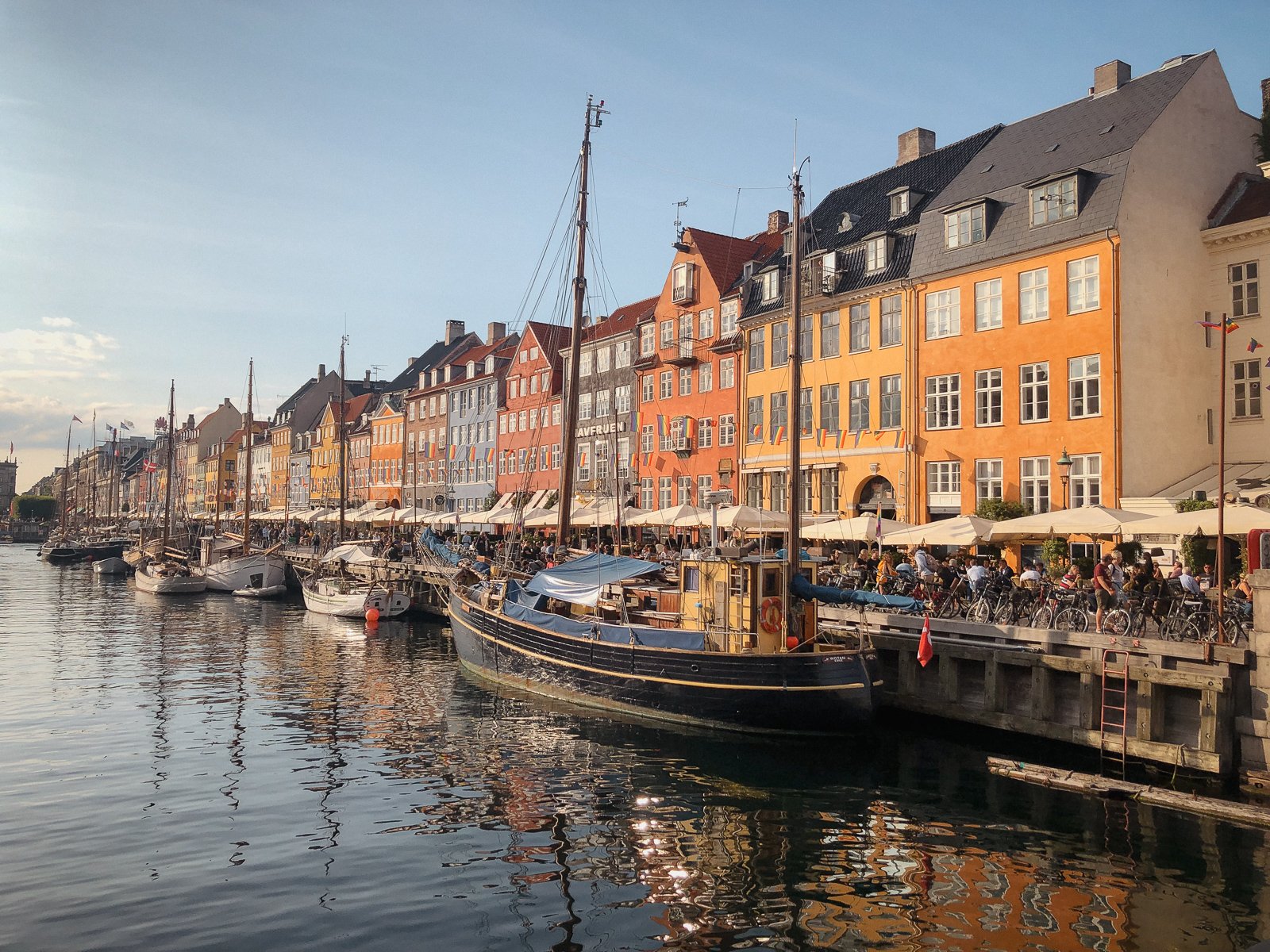
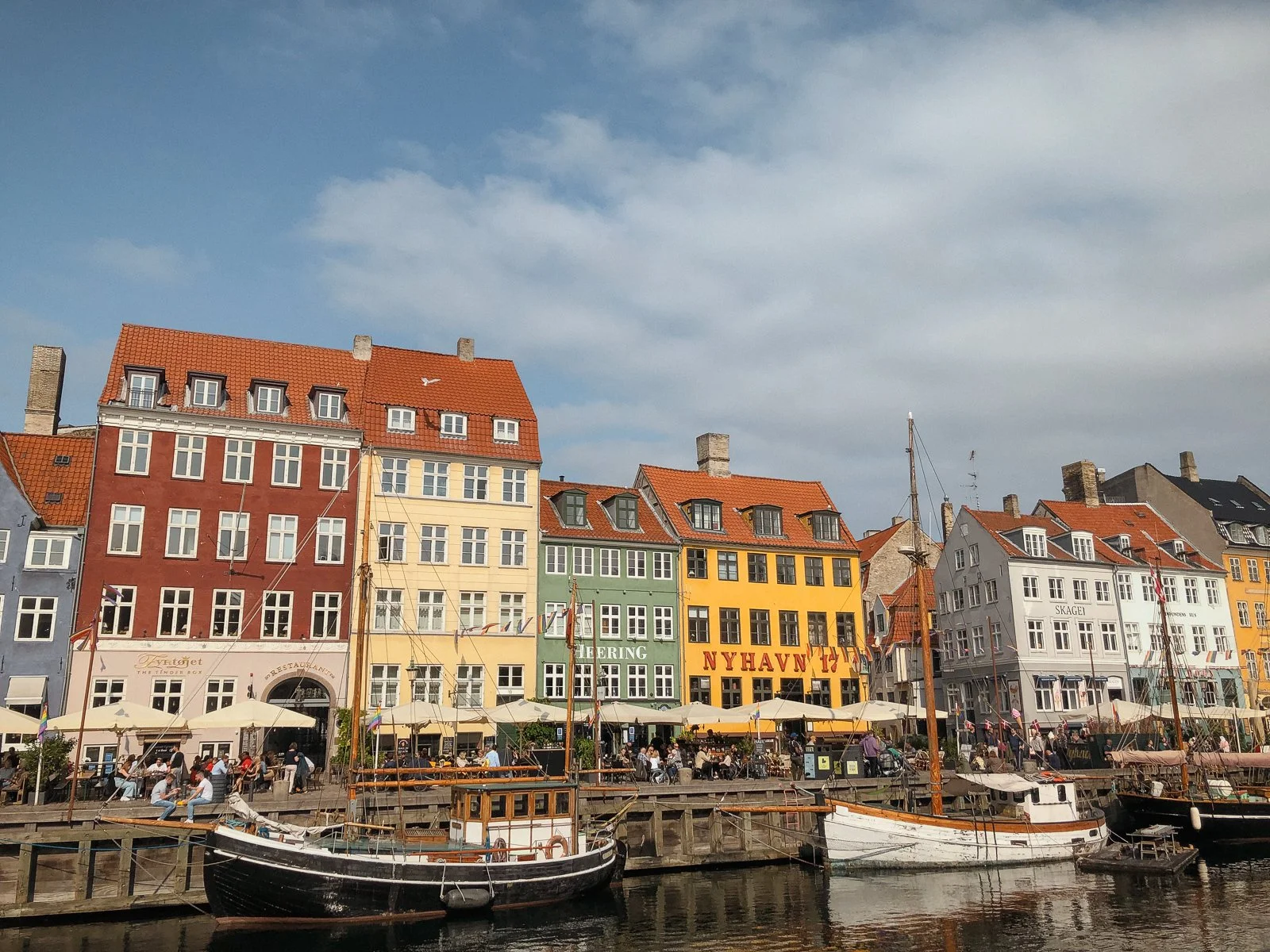
Denmark is one of those countries where citizens are deliriously happy all the time, at least according to surveys conducted by someone. There are a few other deliriously happy countries in the same survey, and they seem to be clustered in Scandinavia.
I didn't understand their happiness until I went there. After all, it's pretty damn cold a lot of the year, and it rains the rest of the time. You would think people would be happiest in places like Tahiti or Key West, Florida.
I changed my mind pretty quickly after a quick trip to Copenhagen. Now I get it.
I talked to a lot of locals, and they mostly gave off a happy vibe. Maybe it's the 37-hour workweek or social welfare. There is a concept deeply embedded in the culture called Hygge, and it translates to contentment in an atmosphere that promotes togetherness and comfort.
When I asked about the government, most felt it runs pretty smoothly. They talked about being pleased with the system's transparency. They knew exactly where their tax money was being spent and apparently agreed with the spending policies.
There's a general consensus that taxes are high in Denmark, and it's true in many cases, but they're progressive and seem fairly allocated among taxpayers.
If you want to drive a luxury foreign car, you're gonna pay a hefty tariff. The tax rate on high-end imports runs to 150% of the government's own assessed value — not the sticker price. Add CO2 surcharges on top of that. Fair enough: if you're gonna drive a Porsche, you pay the price. Big exceptions for electric cars, by the way.
The average Danish worker pays around 45% in total income tax, compared to a US top marginal rate of 37% — though many Americans add state taxes on top, closing the gap considerably. Also, social security in Denmark is funded through income tax, whereas in the US there's a separate payroll tax.
Danes are also hit with a hefty 25% value-added tax (VAT), similar to a sales tax in the US. But on balance, Danes get free healthcare, childcare, and education. Let's face it, those things really add up in the US.
But happiness isn't always driven by tax rates. It's about lifestyle, and the Danes seem to have a pretty good time.
We were booked into a room facing the main street. It was Sunday night, and I guess there was a pub below us because all night, into the early morning, there was a racket of people outside, drinking up a storm.
I politely mentioned it to the front desk in the morning, and the clerk smiled and said, "Well, it was Sunday night." I guess the subtext was: "What the hell are you doing in bed on a Sunday night when there's fun to be had?" I quickly invested in high-end noise-canceling headphones.
Anyway, bleary-eyed, we wandered out in the morning to find some breakfast — and were confronted by what felt like millions of cyclists tearing up the pavement. This was no weekend pleasure ride. Everybody was going to work, and they were in a damn hurry, so don't step into the bike lane if you cherish your life.
This was rush hour, and what was coolest about it was the silence. No rumbling engines, gridlock, or blaring horns. Just the quiet swish of chains running over the sprockets.
As it turns out, 90% of Danes own a bike. In Copenhagen, over 60% of residents commute to work or school by bike. And trust me, when it's snowing heavily, or the sleet is pounding down hard, or the rain is blinding, they are still out there, cranking away to their jobs. There are 239 miles of bike lanes in Copenhagen alone.
If you want a thrill, stand on the Dronning Louises Bro bridge and watch 40,000 cyclists cross it daily.
But let's get focused. What about the food? Well, Denmark isn't about Noma. Nobody's really obsessed with it like some international foodies are — or were, since it's closed. Danes are digging into more traditional dishes.

You can't beat Danish smoked salmon. It's typically cold-smoked from the North Atlantic, often cured with sea salt and smoked over beechwood for a buttery, silky texture. It is a staple of Danish smørrebrød — open-faced rye bread sandwiches served with dill, lemon, egg, or creamy cheese.
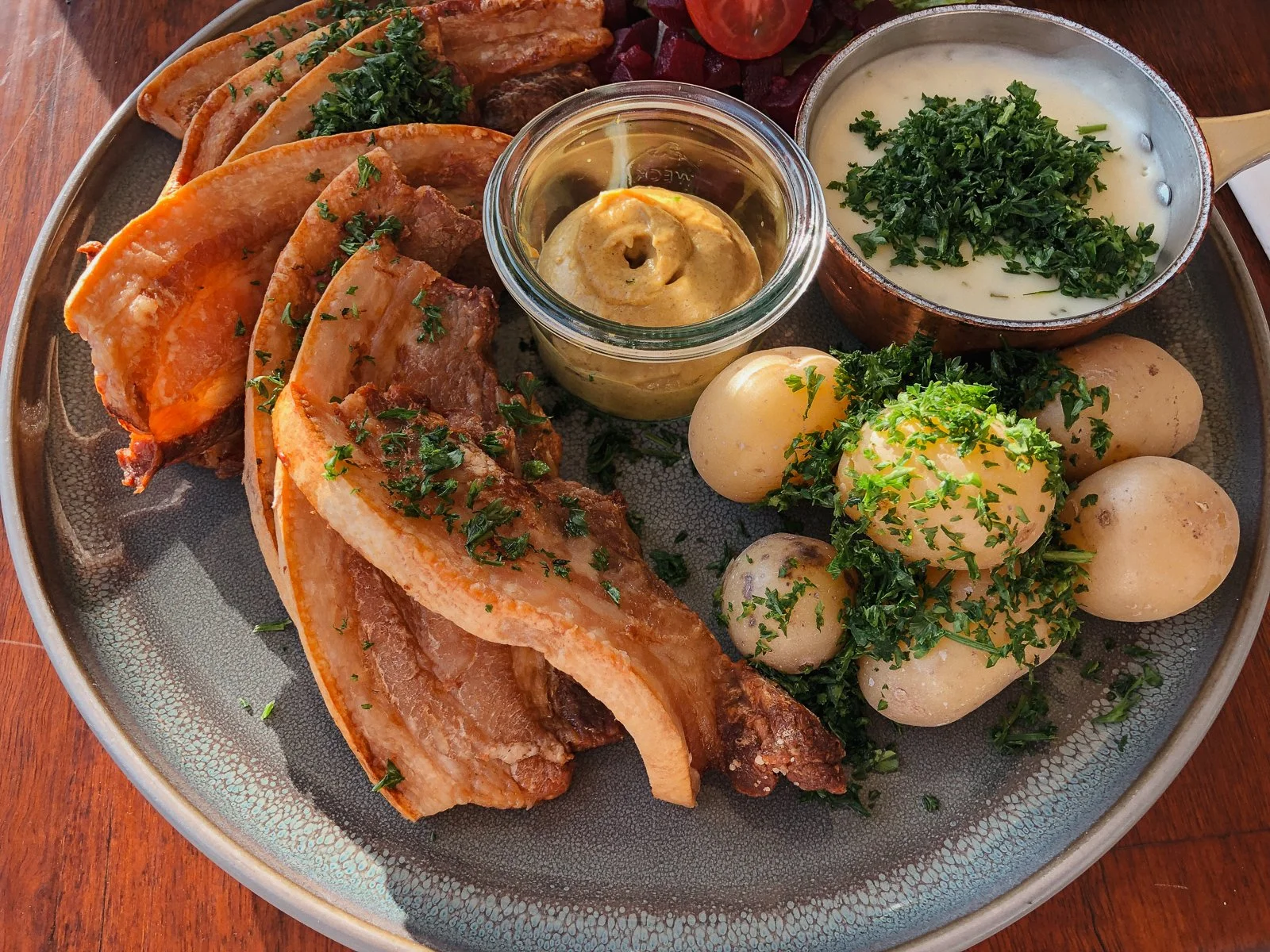
I ordered a Stegt flæsk med persillesauce (try pronouncing that to the waiter) off the menu without a clue what it was. Turned out to be thick slices of pork belly — not smoked like American bacon — which they fry until crunchy and serve with a white parsley sauce. Whoa. If you thought bacon was good, this will take you to new heights of fried pork. Unless you have a heart attack first. It was voted the Danish national dish, so you're in good company.
I also tried buttered rye bread topped with cold cuts, fish, cheese, herring, roast beef, or liver pâté — another classic, simple dish that's hard to argue with.
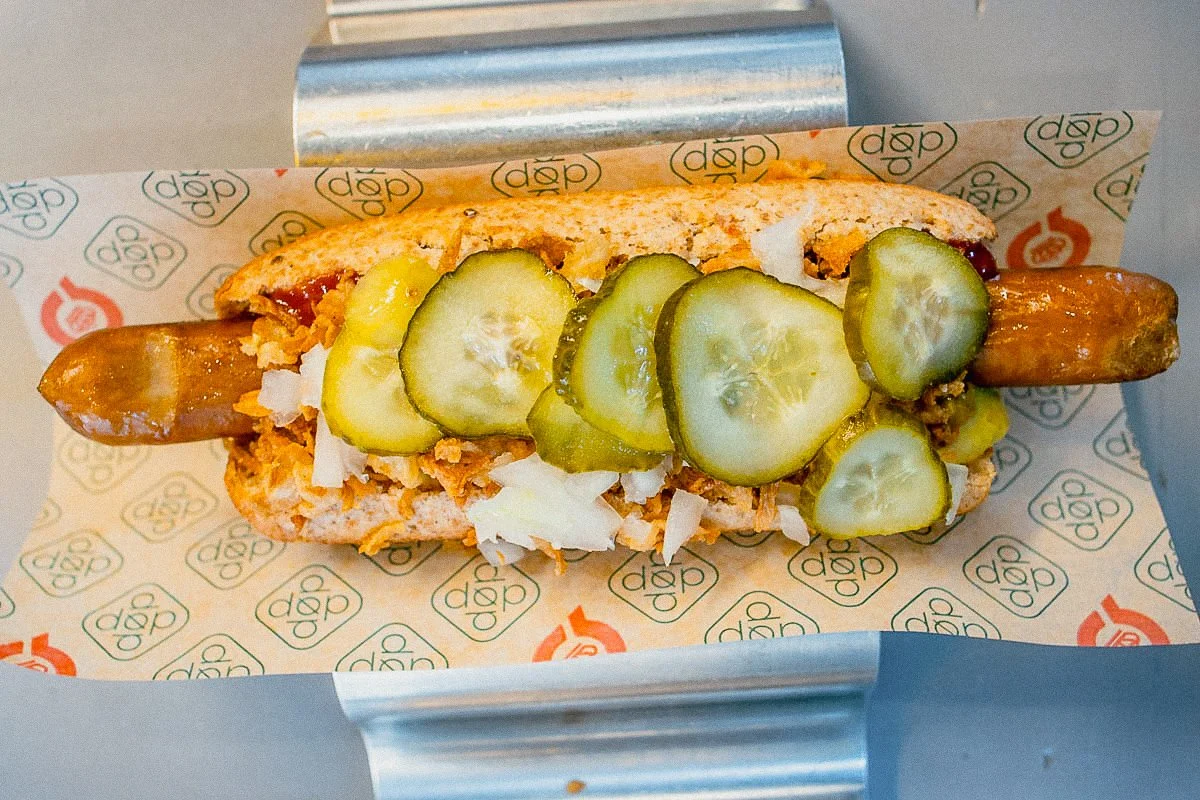
And for some reason, Danes love their hot dogs — particularly from street carts. This is no ordinary ballpark dog.
It comes loaded: a tangy, creamy sauce made with mayonnaise, mustard, capers, herbs, and curry powder; sweet Danish ketchup; mild yellow mustard; chopped raw onions; crunchy fried onions; and thin slices of pickled cucumbers. It is a sloppy, wonderful mess to eat in the street. Grab a half dozen napkins.
After the deep-fried pork belly followed by a fully loaded hot dog, I really needed a walk — along with a few antacids, some Alka-Seltzer, and Galeffi (a magical Italian effervescent). Somewhere I didn't need to dodge manic cyclists.
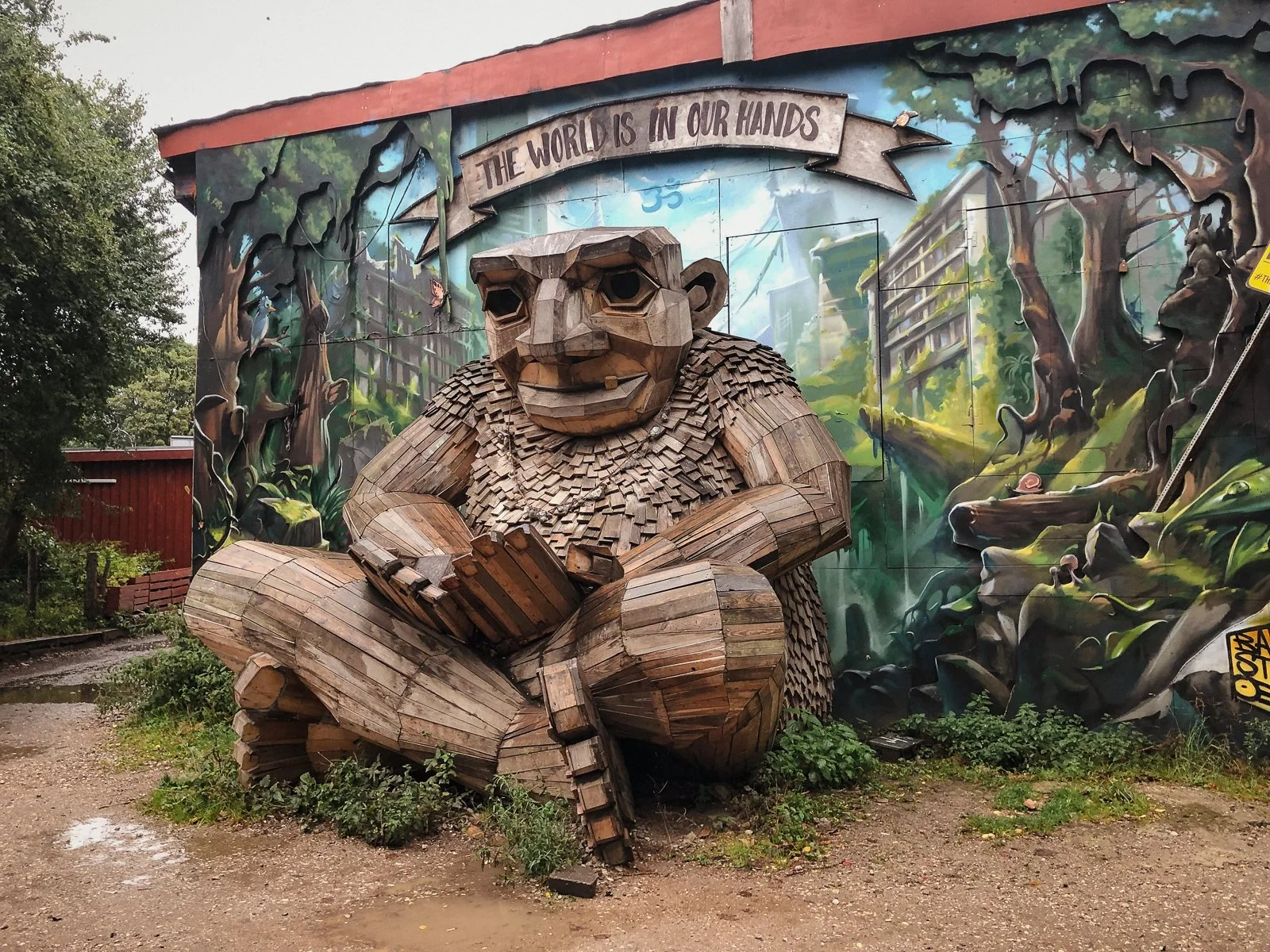
So I walked over to Freetown Christiania, which has a completely different vibe from the rest of Copenhagen. It's a self-governing, alternative community established in 1971 in an abandoned military barracks. A sign at the entrance reads: "You are leaving the European Union." Funny.
Everything here seems handmade, including the houses. You won't see any corporate identities anywhere in the car-free streets. It's a hub of idealists, hippies, potheads, nonmaterialists, and happy children.
You can spend an hour or two wandering around in the daytime, but honestly, I think I would find it a bit creepy at night.